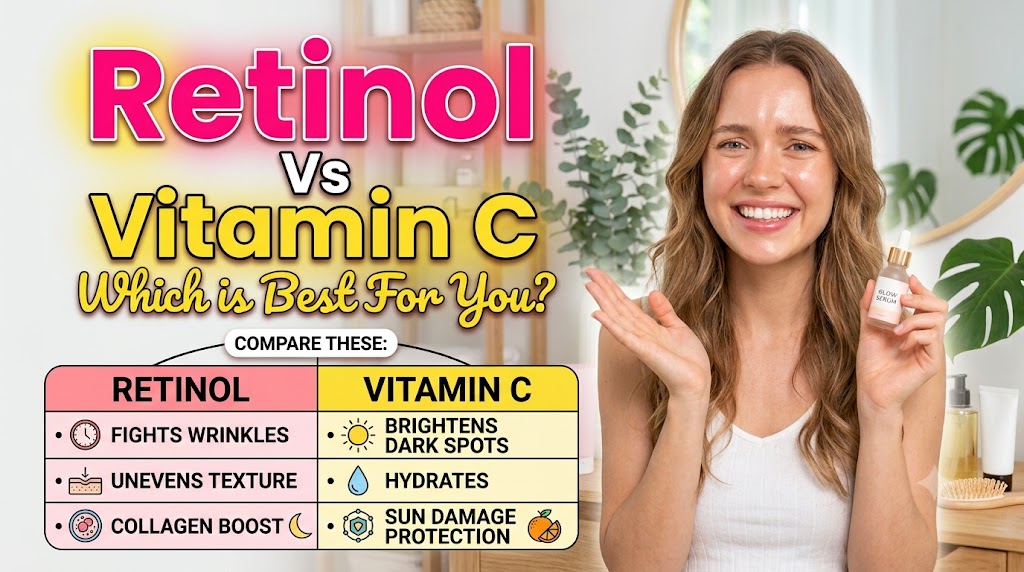
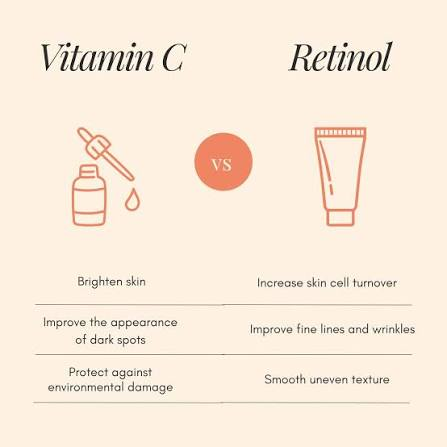
Retinol vs vitamin C is a common skincare comparison for people who want smoother, brighter, and healthier-looking skin. Both ingredients offer unique benefits, but they work differently. Retinol helps improve skin texture and the appearance of fine lines, while vitamin C helps brighten the skin and protect it from environmental damage. In this guide, we’ll explore their key differences, benefits, and how to choose the right ingredient for your skincare routine.
If you’ve spent even five minutes researching skincare ingredients, chances are that you’ve seen two names come up repeatedly: Retinol and Vitamin C. There’s no getting away from the fact that both are skincare darlings and both have a very vocal fan-base in the beauty world; this means that both can really form part of a balanced and appropriate regime for lots of different skin types, but, importantly, they are definitely not interchangeable for all purposes.
This can then usually prompt beginners to ask a single question – what’s the difference between retinol and vitamin C?
This is not a black-and-white issue: the answer depends on the type of improvement you are looking to bring to your skincare routine and lifestyle, where Vitamin C works incredibly well in your morning regime- for brightening and the supporting of healthy, even skin- and how Retinol excels in your evening regime- being very famous for being able to tackle those fine lines, blemish prone skins and overall skin regeneration.
We should always make sure not to treat active ingredients as some magical panacea: skincare requires patience and a certain level of dedication. There is no “the more of it that we use the better” and there should always be a certain balance involved.
If we are beginners within the skincare journey then we should also remember that we do not need an entire cupboard full of active ingredients. Basic cleanser, moisturiser and sunscreen is what comprises all of our basic needs. If we are comfortable with these, only then should we consider integrating a Vitamin C or a Retinol and make sure that this addition has a function.
So without further ado lets look at the differences between Retinol and Vitamin C, what they both really do and what exactly makes one more suitable for you in your daily and nightly routine.
What is Vitamin C?
Vitamin C is an antioxidant commonly used throughout all beauty products across the world. Antioxidants are key components used to combat oxidative stress; caused by external, environmental factors.
In many different beauty formulations and particularly when used within serums, Vitamin C targets areas of the skin that seem dim and uneven in colour as Vitamin C has been observed to support the skin to look brighter and more vibrant after use.
It is important to understand that Vitamin C comes in various different formulae which do not always respond exactly in the same way when they come to the stability issues some variations of this ingredient can experience, and concentration alone is not what determines its success or not. This is why finding a formula you can trust along with its application advice is likely to be much more effective than looking for whatever highest percentage is advertised.
Uses for Vitamin C include:
Supporting skin luminosity.
Helping with uneven pigmentation.
Providing vital antioxidant support.
A part of any healthy looking skin plan.
Works great alongside a sunscreen but is not a replacement.
It is generally used best as part of the AM skin routine where it’s job is to prevent oxidative stress, something sun protection does but alone cannot protect against the ravages of the outside world (thus why they are great together but one cannot substitute the other!)
What is Retinol?
Retinol is a type of retinoid and is therefore chemically related to Vitamin A.
There are various types of retinoid in skincare and are widely loved due to their impact on cell turnover rates and other processes within skin tissue. Retinol is considered a significantly less powerful variant of some other types of prescription retinoids so it is therefore commonly included within the high-street products which aim to counter fine lines, uneven texture, certain blemishes and the generally signs of skin aging.
It should always be considered a product that has to be built up slowly within your skin regime, and it is crucial to note that Retinol should not typically make you skin appear red or feel uncomfortable due to irritations- and so it is important not to introduce yourself into using it with other products which can also provide irritations to your skin.
Uses for Retinol include:
Addressing fine lines.
Improving skin’s smoothness in texture.
Working on some types of surface uneven pigmentation.
Speeding up skin regeneration.
Treating certain forms of acne.
Again, because it is a potentially irritating formulation it needs to be built into the skin gradually, it should not be introduced into the skin’s routine by being applied as if you would your most regular and calming moisturizer.
Retinol V/s VitaminC: What Differentiates The Two?
To put it simply the essential difference between the two formulations is its purpose in our own routines. Vitamin C helps us maintain healthy skin and a brighter appearance through protection, whilst retinol targets more on tissue, and cell reparation in terms of texturing on a skin and improving fine lines. Both formulations have their own definite role they should always play, and there is really no one-better product from all of the ones available that suit differing user needs more so than another.
If we were aiming to get a brighter complexion and give ourselves skin antioxidant support, Vitamin C would serve you better than using Retinol, but if you require improvement within the skin’s tissue then Retinol would be more applicable.
If we wanted to utilize both, both can go in one regime, one AM, one PM, though it’s not essential that we use both products from the get-go.
1. Understanding
Retinol vs Vitamin C
When comparing retinol vs vitamin C, it is important to understand that both ingredients support different skincare goals. Retinol helps improve skin texture and the appearance of fine lines, while vitamin C helps brighten the complexion and protect the skin from environmental stressors.
2. Benefits of Retinol
One important factor in the retinol vs vitamin C comparison is retinol’s ability to support skin renewal. It may help improve uneven texture, clogged pores, and the appearance of fine lines over time. Beginners should start slowly and use sunscreen during the day.
3. Benefits of Vitamin C
In the retinol vs vitamin C debate, vitamin C is often preferred by people looking to brighten their complexion. It can help improve the appearance of dark spots and uneven skin tone while providing antioxidant protection.
Vitamin C Serum Benefits for Brighter Skin
Choosing between retinol vs vitamin C depends on your skin’s needs and tolerance. Vitamin C may help reduce the appearance of uneven pigmentation, while retinol can support skin renewal. Results vary, and consistent sunscreen use is important for preventing dark spots from becoming more noticeable.
5. Can You Use Retinol and VitaminC Together?
The retinol vs vitamin C discussion does not mean you must choose only one ingredient. Some people can use both in the same routine, but introducing them gradually helps reduce the risk of irritation. For a simpler approach, use vitamin C in the morning and retinol at night, depending on your skin’s tolerance.
6. Choosing the Right Ingredient
Ultimately, the retinol vs vitamin C choice should depend on your skincare goals. Consider vitamin C if brightening is your main goal, or retinol if you want to address texture and the appearance of fine lines. If you have sensitive skin, introduce new products carefully.
Basic cleanser>A Retinol product>a standard Moisturizer
Retinol is particularly well known as part of your normal nighttime regime, yet at first it is important that this does not cause discomfort due to harsh irritating factors; be patient, use it only for a short while and in small applications if irritations is noticed, alternatively, if concerned visit the beauty counter advisor for the relevant product.
How to Use Vitamin C in Your Morning Skincare Routine
Yes, it is possible to work both Retinol and Vitamin C into a complete routine at the same time of day, yet not necessarily using both at one application stage, if you wish to improve on fine lines AND also achieve a more consistent and even skin tone, then a Vitamin C can definitely accompany an amazing Retinol within one’s regime; however, you don’t want to push it with your skin type if your skin isn’t used to the concept yet, especially if introducing each ingredient together means that you won’t know what caused the potential irritating issue you may of incurred along the way of your treatment, therefore it is always a much better alternative to gradually introduce into your skin once you’ve accustomed it to at least one product already.
How many times a week should I use Retinol?
Not all women need the same frequency, you could start using retinol fewer times per week and build it up if it tolerates your skin better:
In this case, you could use it on a couple of nights during the week, rather than use the ingredient every night starting from day one.
Make sure you follow your retinol product instructions, different forms of retinol are different strength so recommendations may vary.
It is a good idea to limit the amount you are using if you become very dry, irritated or feel uncomfortable:
You will get more when you use more: this is not always true!
How many times a week should I use Vitamin C?
Different types of products contain different recommendations, for the formulation, always check the vitamin C product instructions you will be using:
You can use vitamin C every day or less often, this depends on your skin type and on the vitamin C composition:
If you feel like your skin is irritated stop the treatment and use it fewer days, till the skin feel well again.
Retinol and vitamin C for Beginners:
So, when it is the first time to use a product for the first time, don’t think about the ingredient, which is better! It is first step that matters:
To establish good skin barrier:
Simple and Easy routine for beginners:
In the morning:
Cleanse
Moisturise
SPF
In the evening:
Cleanse
Moisturise
Once, your routine is established and your skin feels comfortable with it, add a step, but not too fast: Vitamin C can be useful in order to obtain brightness. Retinol is also good and targets skin texture and blackheads. Build up gradually!
Can I avoid night moisturizer?
Night moisturizers do play an important role within your routine, by allowing your skin to become hydrated and support your skin barrier. This is particularly important where treatment with potentially drying products (such as Retinol) is occurring.
MORNING ROUTINE:
Step 1: Apply a mild facial cleanser to your face and wash any excess thoroughly with lukewarm water. If this process doesn’t irritate your skin then proceed to the next step.
Step 2: If you want to introduce some active ingredients into the mix, morning is the perfect time for Vitamin C.
Step 3: Now apply a moisturizing cream for normal skin types; again apply and distribute with gentle motions.
EVENING ROUTINE:
Step 1: Cleansing at this time of day aims at removing residual oil and residue which would otherwise accumulate on the face over night. The cleanser should still be suitable for normal skin, but one that thoroughly strips away product remnants.
Step 2: As the Retinol and Vitamin C are best suited for nighttime application for best results and reduced sunlight susceptibility, we now use the Retinol for step two. As per any product instruction this should again be spread across and within, the pores of the skin and worked gently into the face.
Step 3: Finally top up this nourishing blend with moisturizer. As normal skin also benefits from an extra boost, especially after usage of retinol or an active ingredient from vitamin C throughout the night.
Should I wash my face before makeup?
Cleanse and tone, before you reach for a moisturizer: Your skin has pores that fill up over a whole day; this could mean a residue build-up. So washing your face, while optional, makes sense in that regard before applying anything on top. Applying moisturizer post-wash can also have quite a great effect on skin.
When makeup goes over moisturized skin, it applies that much better.
If you want a boost before foundation use either: AM Routine; Vitamin C first followed by moisturizer. Lastly use SPF and then apply makeup, or as the PM routine says without adding a second portion of Retinol when using it.
Retinol or Vitamin C Which works better in order to make skin bright?
Vitamin C as part of a routine often focuses on helping an unbalanced complexion tone; it has a number of antioxidants within it. On the other hand, there are the renewing agents in Retinol which help improve your skin texture; if signs of aging are causing an unbalanced complex then Retinol can also help here.
Vitamin C and Retinol are both fantastic but to know which one’s better it is dependent on the individual
Retinol or Vitamin C for Acne?
Retinol is typically more associated with skin care addressing acne because retinoids help support the processes responsible for keeping pores clear.
Vitamin C is generally not a “treatment” for acne, though it can be an addition to your routine due to its antioxidant qualities.
If you suffer from chronic, severe, or painfully active acne, it’s better to consult your dermatologist than try different products on a repetitive basis. Acne has various causes and a varying effective treatment method.
How to Use Vitamin C in Your Morning Skincare Routine
Yes. Like anything on the face, or any active skincare ingredient – whether it be Retinol or Vitamin C – there is a risk associated with irritation. A lot of this has to do with what product you use, at what percentage, formulation or if it is or isn’t right for your skin type in particular.
This is why this is something that is generally recommended to be taken in slow bits because it particularly knows for its harshness upon dryness or irritation when applied too quickly.
However, even Vitamin C can be Harsh depending on your formulation and if its right for you in particular. Which again, goes into the gradual application to the skin with this treatment application process.
There’s NO need to begin your Vitamin C, multiple exfoliants, Retinol and lots of active skincare ingredients all at once in your regime. If your skin reacts, simplify your routine. Give your skin time to calm down, before deciding upon any change that requires additional treatment.
Common Mistakes in using
Retinol or Vitamin C:
* Too many products in my regime:
More ingredients don’t always improve skin; sometimes less is best and easy to maintain, problem-solve.
* No sun protection:
When so much time, and money, has been invested into better skin, why would you disregard sun protection daily?
* Using Retinol at night every night to get better skin:
Retinol should be eased in; its never smart to use Retinol at the highest percentage to begin as I stated earlier because all users are different; you will discover how often you can use this at whatever concentration it is that you obtain by experimentation and observing.
* Ignoring Skin Reactivity:
A little patience is better than trying to overcome skin irritation at an accelerating pace.
* Don’t switch skin products so quickly:
Your skin will have a bit of time to get used to it, be patient…
* Don’t expect drastic results instantaneously, skin care is not like a speedy program on t.v.:
Your time will vary depending on all factors, including your skin type, the consistency of your treatment plan, which type of formulation you are using and your personal lifestyle, can affect the speed at which results are viewed; it’s important not to measure results with weeks or a “quick fix of flawless skin”.
Final Verdict: Retinol vs Vitamin C — Which Should You Choose?
Whether vitamin C or Retinol is the more appropriate product, the answer entirely depends upon your desired cosmetic goal for your skin. Vitamin C is an advantageous addition and great product that is helpful with antioxidant protection and brightening the look and overall feel of the skin. You’d consider using Retinol for skin concerned with improving the look of fine lines/wrinkles,uneven tone or texture and fine blemishes/acne marks etc… You could even use both on your face as long as, remember again to apply these actively on different parts of the day but don’t consider integrating new products immediately into your regime.
A simple moisturizer, cleanser and SPF are fundamental to excellent skin. Anything beyond this really helps assist your core fundamentals of skin maintenance but really cannot substitute these key products. Importantly too, skin care should be all about nurturing your skin more so than a search for perfection.
We all have pores that may be seen, skin that appears non smooth and blemish scars can and are always a part of most people’s lives.
It is the person who has an understanding of their specific skin type who can work out the way they should treat and use their products and NOT simply follow trends on where, what and who’s advising. This doesn’t at all mean your skin regime doesn’t need anything beyond your core items; there will be other more targeted treatments to apply alongside your fundamentals that make sense and benefit your skin, or do not make sense and will not help benefit your skin and hence will be ignored. The final and most appropriate skincare product that benefits your face depends on what you personally seek for it in relation to the care you give it.